Dual‑Track Demand Gen, Live in 14 Days
O8 launched paid media, landing experiences, and compliant lead capture to support a clinician‑influenced product rollout across both end users and clinicians.
“Within weeks, we had a clear two‑track launch system: one path for end users to get a practical info kit, and another for clinicians to access evaluation resources. That structure made it easier for our team to run coordinated campaigns without losing measurement.”
Marketing lead, Healthcare manufacturer
Introducing the Story of Our Client
This healthcare manufacturer was launching a power‑assist accessory designed to improve day‑to‑day movement for end users across real‑world environments. Their go‑to‑market needed to speak to two audiences at once: end users who wanted simple, confidence‑building next steps, and clinicians who needed quick access to standards, classification context, and evaluation resources. The objective was a fast, measurable rollout that could scale once early signal was validated.
The Challenge
Launch a high‑velocity program that:
- Reached two distinct audiences with different intent and information needs.
- Created a low‑friction conversion step without collecting unnecessary sensitive data.
- Instrumented clean tracking so the team could optimize quickly.
- Established a repeatable structure that could scale after the initial fast‑launch window.
The Scope
- Dual‑track audience strategy: end user pull + clinician enablement
- Paid media buildout across Google and Meta, plus a capped clinician-channel test
- Landing experiences for both audiences
- Conversion tracking, UTMs, and funnel measurement in GA4
- Lead capture and lifecycle automation (transactional delivery + opt‑in nurture)
- Ongoing optimization summaries and performance readouts
Why They Chose O8
The team needed a partner that could move quickly without treating tracking, compliance posture, and lifecycle design as afterthoughts. O8 brought an execution approach that paired speed with structure: define the two tracks, define the conversion goal for each, instrument the funnel, then iterate based on what the data proved.
How O8 Responded
O8 delivered a fast-launch plan anchored in three principles:
- Two audiences, two paths: consumer-facing clarity and clinician-facing enablement (without forcing a single blended message).
- One primary conversion per path: a clear “next step” designed for scanning and action.
- Measurement built-in: conversion events, UTMs, and funnel views set up before scale.
Implementation approach:
- Built initial campaign structure and creative/copy variants.
- Mapped conversion events and validated tracking integrity.
- Created an email-first “information kit” delivery mechanism to support the next step.
- Established a lightweight nurture approach with strict consent rules.
The Implementation
Landing experiences and conversion design
- A consumer path focused on a practical “information kit” concept to support the next step (preparing for a clinician conversation).
- A clinician path structured around concise evaluation resources and documentation links.
Lifecycle and data governance posture
- Email-first delivery model.
- Clear separation between transactional delivery and optional marketing follow-up.
- Data-minimization posture to reduce sensitivity in early-stage lead capture.
Tracking and attribution
- GA4 event mapping and funnel tracking.
- UTM and naming standards across channels.
- Regular performance readouts to guide optimization.
The Results
Performance exceeded typical lead-generation benchmarks for engagement and conversion efficiency during the measured window.
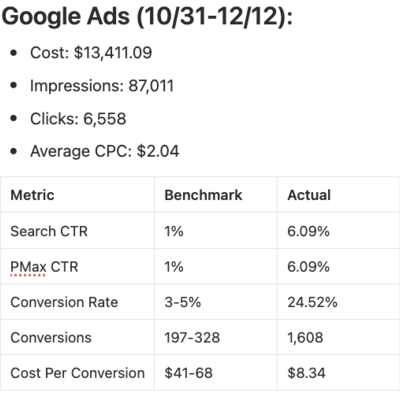
On Google Ads (10/31–12/12), engagement and conversion rate materially outperformed benchmark expectations, with a strong cost per conversion. On Meta Ads over the same window, performance tracked closer to typical expectations, which helped inform channel allocation recommendations.
Results summary (selected):
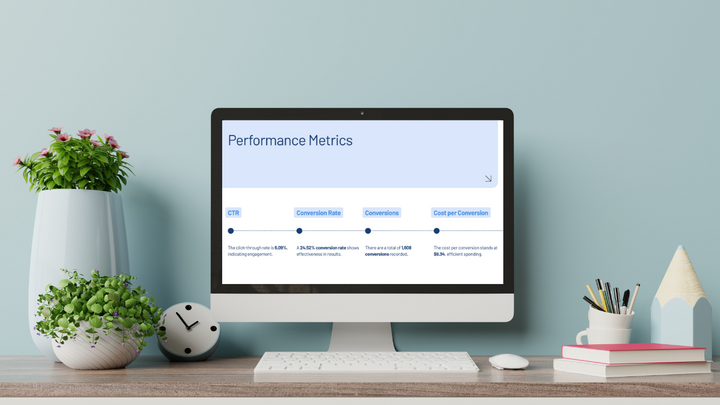
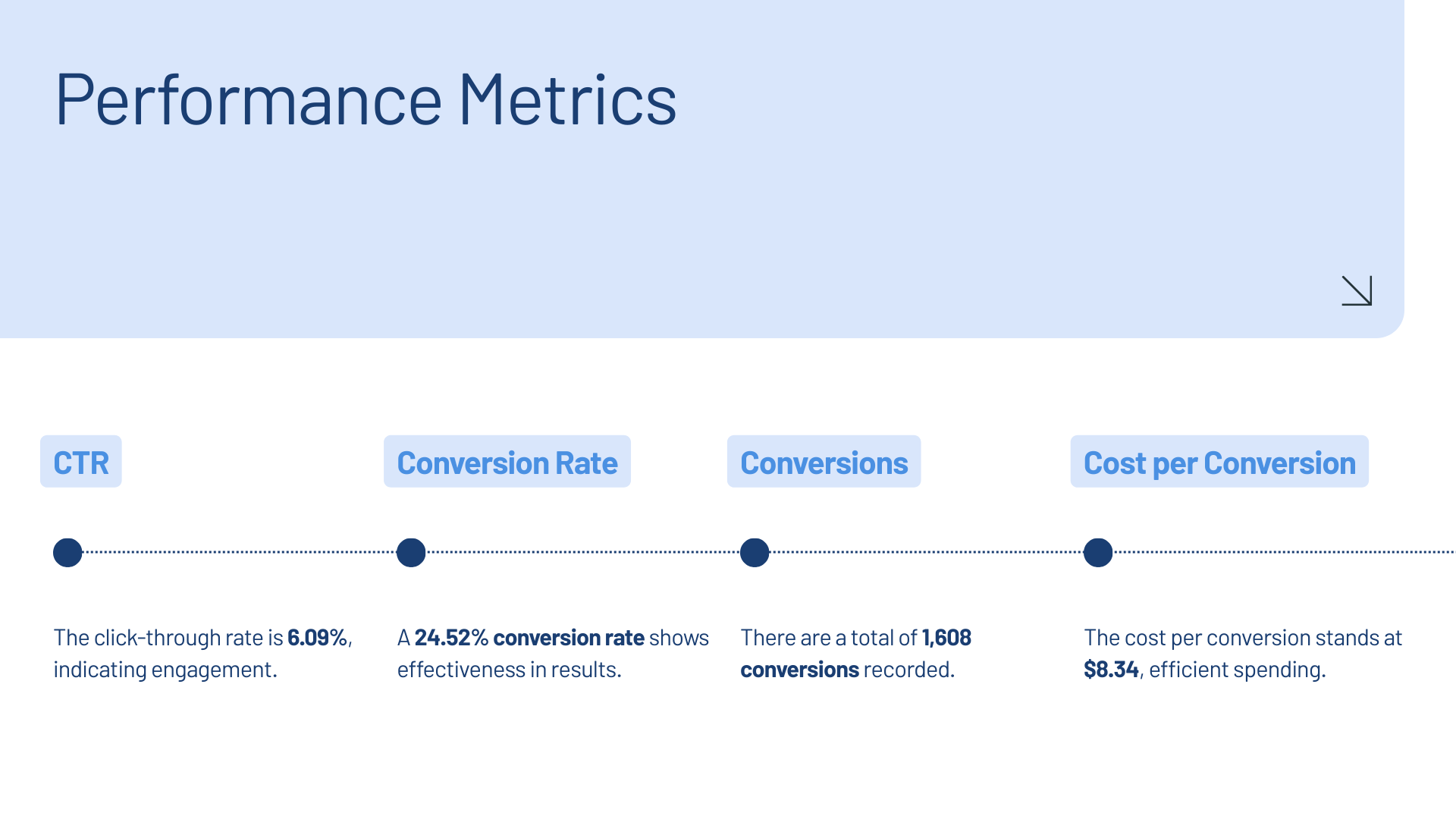
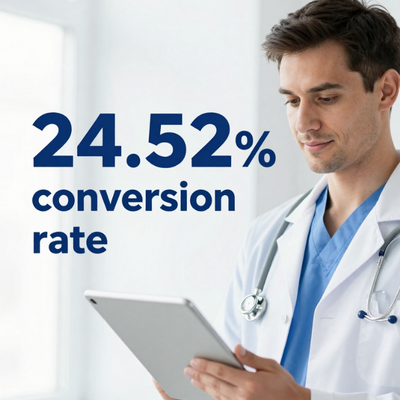
- Google Ads: 6.09% CTR, 24.52% conversion rate, 1,608 conversions, $8.34 cost per conversion.
- Meta Ads: 3.19% CTR, 1.1% conversion rate, with conversions including clinician checklist pageviews and key CTA clicks.
Impact at a Glance
6.09% CTR — benchmark is 1%
8x more conversions than expected
If you are launching a clinician‑influenced product with regulated constraints, you need more than ads.
Build a two‑track system with clear next steps, clean measurement, and lifecycle rules from day one.