
Drupal security
Drupal Security & Modernization Services: Patched, Supported, Documented
- 200+ digital projects delivered over 16+ years
Talk With a Drupal Security Expert
Tell us about your goals
Usually responds within 1 business day · No spam, ever
By submitting this form, you agree to our Privacy Policy and Cookie Policy.













Nobody Wants To Touch The Drupal Site
Core is versions behind
Once your core version falls a major release behind, the update stops being a patch and becomes a project. Contributed modules drift out of compatibility, PHP versions age out of support, and every month of delay adds work. When core reaches end of life, security patches stop permanently.
The build is undocumented
The agency or developer who built the site moved on and left no documentation, no local setup instructions, and custom modules nobody can explain. Your team is afraid to run updates because there is no way to predict what breaks. That fear is what keeps sites unpatched for years.
Downtime costs you leads
A broken Webform, a failed CRM handoff, or an hour of downtime does not just look bad. It silently stops lead capture, application submissions, and donation flows. Most security conversations ignore the revenue and compliance side entirely.



Audit First, Then Patch, Then Modernize
Documented security audit
We inventory core version, every contributed and custom module, PHP and database versions, hosting and caching configuration, user roles, and known advisories. You get a written audit with findings ranked by severity and effort. Nothing is fixed before you can see what is wrong.
Patch pipeline setup
We stand up the same update pipeline we run in production on o8.agency: composer audit, feature branch, QA on a staging environment, your approval, then merge. Updates stop being a scary manual event and become a repeatable checklist with a rollback path.
Modernization plan
We map the path from your current version to a supported one, flagging modules that need replacement, custom code that needs refactoring, and anything better handled by a redesign than an upgrade. You get a sequenced plan with dependencies named, so the work fits real budget cycles.
Ongoing monitoring and handoff
We monitor Drupal Security Team advisories, run scheduled update cycles, and verify that forms, integrations, and caching still work after each release. Documentation and local setup instructions go to your team, along with training so internal editors and developers are not dependent on us for routine work.
Find Out What Your Drupal Site Is Actually Running
“I am currently working on a site migration with O8. They are very responsive and do great work. I really enjoy working with them. I even look forward to meetings with the team, because I can discuss issues, work out solutions, and learn new things as well.”

Christina Goodland
Website Manager • OIT, UMN
“The O8 team has exceeded our expectations and been an incredible resource as we navigated the challenges of deploying complex projects. They've proved to be extremely responsive, creative, and responsible partners in the design, development, and deployment processes and I recommend them highly.”

Chris Scruton
Academic Technology Systems Analyst • University of Minnesota OIT
“The O8 team was a pleasure to work with and I would highly recommend them to anyone looking for Drupal Web Solutions.”
Why Organizations Trust O8 With Drupal
We run this on our own site
O8's own site runs Drupal with Varnish, Redis, and Cloudflare on Upsun at real production traffic. The security update pipeline we set up for clients is the one we depend on ourselves. We are not testing a theory on your platform.
Live enterprise Drupal we still support
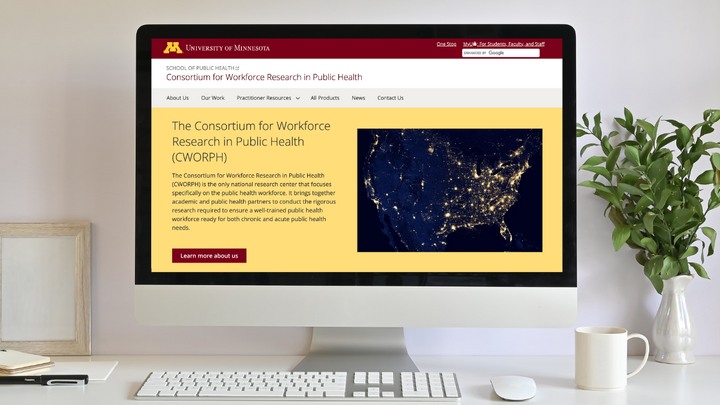
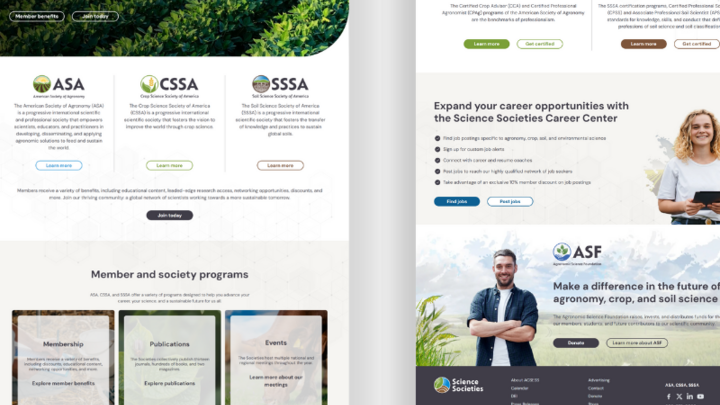
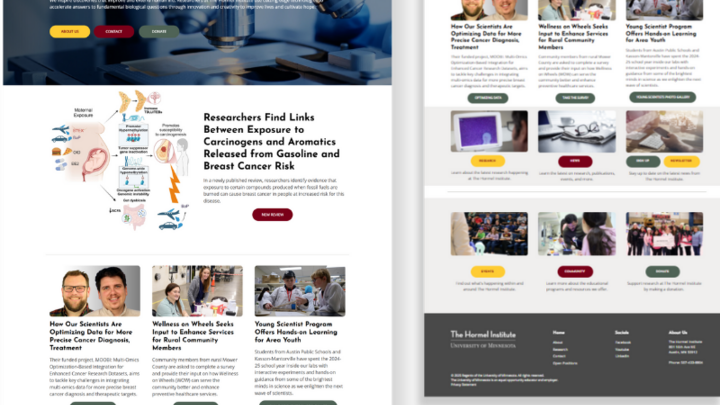
We build and actively support production Drupal sites for the University of Minnesota, Baker University, MCAD, St. Mary's Press (LERI), and Ecumen. Higher education, publishing, and senior living all carry real compliance and uptime expectations. That is the environment we work in daily.
We take over sites we didn't build
Undocumented, agency-abandoned Drupal installs are a normal starting point for us, not a disqualifier. We begin with discovery and documentation so the codebase becomes legible before we change anything. You get a written record of what you actually own.
Security tied to lead capture
Our growth marketing background means we test the things that generate pipeline: forms, tracking, CRM handoffs, and page speed. A patch that quietly breaks a Webform is a failed patch. We verify conversion paths after every release.
We never push you off Drupal
An out-of-date site rarely needs a platform change. In most cases the right answer is an in-place upgrade, module cleanup, and a patch cadence. We recommend replatforming only when the evidence supports it.
Track record you can check
200+ digital projects over 16+ years, an 84% client retention rate, and 4.8 on Clutch, 5.0 on Google, and 5.0 on Facebook. Senior people do the work. You are not handed to a junior queue after the contract signs.
More O8 Drupal Services
Drupal Support & Maintenance
Learn more about Drupal Support & Maintenance →Drupal Enterprise Support
Learn more about Drupal Enterprise Support →Drupal Migration Services
Learn more about Drupal Migration Services →Drupal Development Company
Learn more about Drupal Development Company →Drupal Security Questions We Hear Most
Cost depends on the size of the codebase, how far behind core is, how many custom modules exist, and whether hosting and caching need work. We scope pricing after the documented audit, so the number reflects the actual condition of your site rather than a guess. A site one release behind with clean contrib is a very different engagement than an end-of-life install with undocumented custom code.
No. An out-of-date Drupal site does not automatically require leaving the platform. In most cases the right path is an in-place core upgrade, replacement of abandoned contributed modules, and a recurring patch cadence. We only recommend replatforming when the audit shows the existing build cannot reasonably be brought forward.
A full review of the core version, every contributed and custom module against published advisories, PHP and database versions, file permissions, user roles and access, hosting and caching configuration, backup and rollback readiness, and form and integration integrity. You receive written findings ranked by severity and remediation effort. The audit is a deliverable you keep, whether or not we do the remediation.
Check for security patches at least monthly, since the Drupal Security Team publishes advisories on a regular schedule and critical releases can land outside it. Highly critical advisories should be applied as soon as they are tested on staging. Our pipeline runs composer audit against your dependency tree on a set cadence so nothing waits for someone to remember.
Yes. We regularly take over Drupal sites built by other agencies or by in-house teams who have since moved on. We start with a documentation and discovery phase: local environment setup, dependency inventory, custom module review, and hosting access mapping. Once the site is legible, we move it onto a scheduled update pipeline.
What Drupal Security and Modernization Services Include
Drupal security and modernization services cover the audit, patching, and structural upgrade work needed to keep a Drupal site secure, supported, and easy to update. That includes core version upgrades, contributed module updates, custom module review, PHP and database version alignment, hosting and caching configuration, access and role cleanup, and written documentation of what was found and what changed. The point is not a one-time cleanup. The point is a site your team can update on a schedule instead of a site nobody wants to open.
Most agency copy on this topic stops at "we patch and update." That skips the part that matters to the people paying for it: what an unpatched or end-of-life core version actually costs. For a university, it is application forms failing during enrollment season. For a healthcare or senior living organization, it is compliance exposure and downtime on pages patients and families depend on. For a B2B company, it is broken lead capture and CRM handoffs that quietly drain pipeline for weeks before anyone notices.
When You Need Drupal Security Work
You need Drupal security work when your site is running a core version more than one major release behind, when nobody on your team can say with confidence when the last patch was applied, when the original build team is gone and left no documentation, or when your core version has reached end of life. End of life is the hard deadline: patches stop permanently, and any newly disclosed vulnerability stays open on your site forever.
Two softer signals matter just as much. First, if updates are treated as a special project instead of routine maintenance, the cost of each cycle is compounding. Second, if forms, analytics, or CRM integrations have broken after past updates and nobody caught it for weeks, you have a QA gap rather than a code gap. We test both. Our team's Growth & Marketing Services background is exactly why we treat a broken Webform as a failed release rather than a cosmetic issue.
What a Strong Drupal Security Engagement Looks Like
A strong engagement starts with a documented audit covering core version, module vulnerabilities, server and PHP configuration, user access, backup readiness, and form and integration integrity. Findings get ranked by severity and remediation effort so you can sequence work against real budget cycles. Then remediation runs through a repeatable pipeline instead of ad hoc SSH sessions.
O8 runs a reusable, semi-automated Drupal core and contrib update pipeline in production on our own o8.agency site: composer audit against the dependency tree, a feature branch for the update set, QA on a staging environment, explicit approval, then merge. Our own site runs Drupal with Varnish, Redis, and Cloudflare on Upsun at real production traffic, so the process is one we depend on, not one we invented for a proposal. When we set this up for a client, the deliverable is the pipeline itself plus documentation, so the cadence survives staff turnover.
Engagement models we scope
| Model | What it covers | Best when |
|---|---|---|
| Security audit only | Written findings on core, contrib, custom code, hosting, access, and backups, ranked by severity | You need to know your exposure before committing budget, or you inherited a site and need a baseline |
| Ongoing security retainer | Scheduled composer audit, patch cycles on staging, post-release QA on forms and integrations, advisory monitoring | Core is current or one release behind and you want it to stay that way |
| Modernization project | Major core upgrade, abandoned module replacement, custom code refactoring, performance and caching work, documentation and handoff | Core is multiple releases behind or at end of life |
How Much Does Drupal Security & Modernization Cost?
Pricing is scoped after the audit, not before it. The variables that move the number are the number of contributed modules in the build, how much custom code exists and whether it is documented, how many major versions separate your current core from a supported one, hosting and caching conditions, and how many integrations and forms need post-release verification. A site one release behind with clean contrib is a fundamentally different engagement than an end-of-life install with undocumented custom modules and no staging environment.
Because of that spread, we do not publish a package price. We run the documented audit first, show you the findings, and then scope remediation so you are buying against evidence. If the audit shows an in-place upgrade is not the right path, we say so, and we may recommend a a website redesign engagement instead of a rebuild-in-place. We never push clients off Drupal to sell a bigger project.
Taking Over a Drupal Site You Didn't Build
Undocumented, agency-abandoned Drupal sites are a normal starting point for us. Discovery comes first: local environment setup, dependency inventory, custom module review, hosting and DNS access mapping, and a written record of what you actually own. Only after the codebase is legible do we start changing it.
We build and actively support live enterprise Drupal sites for the University of Minnesota, Baker University, MCAD, St. Mary's Press (LERI), and Ecumen. Those are environments where downtime and access failures have real consequences, which shapes how conservatively we sequence upgrades. Longer term, structural work often overlaps with our Web Design & Development Services team, and forward-looking builds sometimes involve our our AI web development team practice when new functionality is on the roadmap alongside the upgrade.
Handoff So Your Team Is Not Dependent On Us
The end state we aim for is an internal team that can run routine updates and content work without a support ticket. That means documentation written for humans, local setup instructions that actually work, and role-appropriate training for editors, marketers, and developers. Retainers should exist because you want senior help available, not because nobody else can log in.
How Our Delivery System Supports Drupal Security Work
Behind the scenes, O8 Intelligence is the internal delivery infrastructure we use to keep advisory monitoring, dependency audits, and post-release QA results connected in one auditable trail. When a highly critical advisory drops, we can see which client sites carry the affected module, what version each is on, and what changed in the last release cycle without reassembling that context by hand. It is not a product you log into. It is why our reporting on your patch history is specific instead of vague.
Get The Audit First
The fastest way to know your real exposure is a documented audit of core, contrib, custom code, hosting, and access. Bring us the site, even if the last team left nothing behind. We will tell you what is running, what is at risk, and what order to fix it in.