
higher education web development agency
Higher Education Web Development Agency: Websites That Move Prospective Students to Apply
- 15+ years building and maintaining websites for universities, colleges, and complex organizations
- 4.8 stars on Clutch, 5.0 on Google, 5.0 on Facebook
- Accessibility built into design, development, and QA rather than patched in after launch
Talk With a Higher Ed Web Expert
Tell us about your goals
Usually responds within 1 business day · No spam, ever
By submitting this form, you agree to our Privacy Policy and Cookie Policy.





Your Site Has the Content. Students Still Cannot Find It.
Navigation built around the org chart
Prospective students search for programs, cost, and next steps. Most campus sites organize pages around departments, colleges, and internal committees instead. Visitors bounce between four menus and never reach the inquiry form.
Accessibility handled as a cleanup task
Color contrast, keyboard navigation, heading structure, and PDF remediation get deferred until an audit or complaint forces the issue. Treating accessibility as a late retrofit creates avoidable rework and can leave barriers in place during enrollment. It can also leave students unable to complete an application.
Approval chains that stall the build
Admissions, faculty, IT, marketing, and general counsel all hold veto power. Without a decision structure agreed in discovery, redesigns drift for quarters and launch late. The site ships as a compromise nobody advocates for.



A Build Process Designed for Multi-Stakeholder Campuses
Discovery and stakeholder alignment
We interview admissions, marketing, IT, and department leads, then review analytics, search console data, and inquiry form paths. You get a stakeholder map, a documented decision structure, and a prioritized findings deck. Everyone learns who approves what before design starts.
Information architecture and UX
We restructure navigation around student intent: programs, cost and aid, admissions steps, and campus life. Deliverables include an annotated sitemap, key page wireframes, and clickable prototypes for program, department, and application landing templates.
Design, build, and accessibility QA
We design a component library and build it in Drupal or WordPress with reusable content types for programs, faculty profiles, news, and events. Accessibility checks run through design review, development, and pre-launch QA, with a documented remediation log for anything flagged.
Launch, training, and iteration
We handle migration, redirect mapping, and launch-day monitoring, then train your editors with recorded sessions and a written content governance guide. After launch we review analytics and inquiry form performance on an agreed cadence and ship improvements in scheduled sprints.

Ready to Modernize Your Higher Ed Website?
“I am currently working on a site migration with O8. They are very responsive and do great work. I really enjoy working with them. I even look forward to meetings with the team, because I can discuss issues, work out solutions, and learn new things as well.”

Christina Goodland
Website Manager • OIT, UMN
“The O8 team has exceeded our expectations and been an incredible resource as we navigated the challenges of deploying complex projects. They've proved to be extremely responsive, creative, and responsible partners in the design, development, and deployment processes and I recommend them highly.”

Chris Scruton
Academic Technology Systems Analyst • University of Minnesota OIT
“The O8 team was a pleasure to work with and I would highly recommend them to anyone looking for Drupal Web Solutions.”
Built for Campuses With Real Approval Chains
Higher ed experience on the record
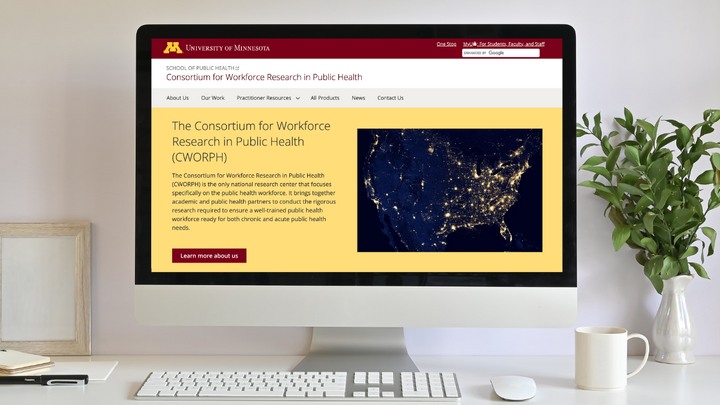
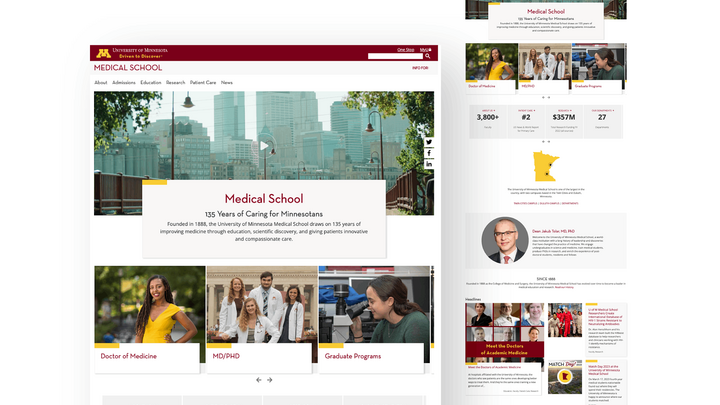
We have supported web work for University of Minnesota Medical School, Wisconsin Technical College System, and Baker University. That means we already understand distributed content ownership, department politics, and semester-driven timelines.
Complex-sale thinking applied to enrollment
Our work with organizations like HelpSystems (now Fortra), Ecumen, and Consulting Radiologists taught us how to build sites for long consideration cycles with multiple approvers. Choosing a college follows the same pattern. We design pages for the researcher, the influencer, and the person who signs.
Accessibility as a design constraint
We write accessibility requirements into design specs, component documentation, and QA checklists. Editors get guidance on alt text, headings, and link language so the site stays accessible after launch.
Drupal and WordPress depth
We build on the CMS your IT team can actually maintain, with structured content types instead of one-off page builds. Program, course, and faculty data stays reusable across the site.
Senior people on your project
Our development lead, UX lead, and strategy leads work directly with your team. You are not handed to a rotating bench of junior coordinators.
Communication your team can follow
Our project management system keeps decisions, tickets, and approvals easy for your team to find throughout the engagement. The reporting cadence gives stakeholders a clear view of progress and next steps.
More O8 Services
Higher Ed Digital Marketing
Learn more about Higher Ed Digital Marketing →Web Design & Development
Learn more about Web Design & Development →Drupal Development
Learn more about Drupal Development →AI Web Development
Learn more about AI Web Development →Higher Education Web Development Questions
Look for a proven track record across institutions with comparable size and governance, documented accessibility practice, and CMS expertise your IT team supports. Ask for named client work, review ratings you can verify, and a clear plan for handling multi-stakeholder approvals. Then confirm the agency measures success against enrollment funnel behavior, not only design awards.
We scope and price after a discovery assessment of your current site, CMS, content volume, integrations, and stakeholder structure. A single-department microsite and a full university migration are very different projects, so a quoted range before that assessment would be guesswork. Talk with an advisor and we will walk you through what drives scope for your institution.
Drupal fits institutions with large content libraries, many editors, complex permissions, and structured program data. WordPress fits teams that want faster editing and a lighter maintenance footprint. We recommend based on your content model, integration needs, and who will maintain the site in three years, not on our preference.
We write accessibility into design specifications, build components with keyboard and screen reader support, and run checks during development and pre-launch QA. You receive a remediation log and editor guidance covering alt text, heading structure, link language, and document handling. Accessibility stays a maintained practice rather than a one-time pass.
Timeline depends on page count, number of content owners, integrations, and how quickly approvals move. Discovery and information architecture usually run first, followed by design, build, migration, and QA in sequenced phases. We set the schedule against your academic calendar so launch does not land in the middle of application season.
What Is a Higher Education Web Development Agency?
A higher education web development agency designs and builds websites for colleges, universities, and educational institutions, with specialized attention to the audiences and constraints those institutions carry. That means prospective student recruitment, accessibility compliance, decentralized departmental publishing, and integrations with student information systems and application platforms. A general web shop can build you a beautiful homepage. A higher ed specialist understands why your admissions team, your provost's office, and your IT security reviewer all have veto power over the same page template.
The distinction matters because higher ed sites carry more jobs than most commercial sites. One property has to recruit applicants, reassure parents, serve current students, support faculty, and make the case to donors. Each of those audiences arrives with different questions and different tolerance for friction. Treating the site as a single brochure guarantees it underperforms for all five.
When Does an Institution Need Specialized Higher Ed Web Development?
An institution needs specialized higher education web development when its current site fails to convert prospective students into inquiries and applications, when accessibility gaps make it harder to meet requirements such as WCAG 2.2 AA, or when departmental sprawl has made the site impossible to govern. Those three problems tend to arrive together.
Practical signals we hear from higher ed marketing leaders:
- Program pages rank poorly or not at all for the degree searches that matter to enrollment.
- Request-for-information forms sit below the fold, behind a click, or on a page nobody visits.
- Tuition, deadlines, and financial aid details live in PDFs that are neither indexed nor accessible.
- Forty departments publish forty different navigation patterns.
- An accessibility audit produced a remediation list nobody has resourced.
- The CMS is on an unsupported version and IT has flagged it as a security risk.
If three or more of those describe your situation, the fix is structural rather than cosmetic. A visual refresh on top of broken information architecture buys you about a year before the same complaints return.
What a Strong Higher Education Web Engagement Looks Like
A well-run higher education web development engagement starts with discovery into prospective student journeys, stakeholder priorities, and the technical realities of your existing platform. It does not start with a homepage comp. We interview admissions, advancement, IT, and faculty representatives, then document what each group needs the site to accomplish and where those needs conflict. Naming the conflicts early is what keeps a project from stalling in month five.
From there the work moves through information architecture, UX design grounded in how prospective students actually search and compare, visual design, CMS build, content migration, accessibility QA, and launch. The engagement should end with your team trained and a governance model in writing. For institutions where the existing platform is sound but the experience is not, a focused website redesign often delivers more value than a full rebuild.
Named deliverables you receive
- Stakeholder interview synthesis and prioritized findings document
- Journey maps for prospective students, parents, current students, and donors
- Full content inventory with keep, revise, and retire recommendations
- Sitemap and annotated wireframes for admissions and program templates
- Clickable prototype tested for keyboard and screen reader navigation
- Responsive design system and reusable component library
- WordPress or Drupal build with editor-safe page templates
- Content migration plan and execution
- Accessibility documentation and editor guidance
- Recorded CMS training sessions and a written editor handbook
- Site governance model with section-level ownership assigned
WordPress or Drupal for a University Site?
| Consideration | Drupal | WordPress |
|---|---|---|
| Many publishing departments | Strong fit. Granular roles and permissions built in. | Workable with added plugins and governance discipline. |
| Multisite structures | Native and mature. | Available, requires more configuration. |
| Editor speed and familiarity | Steeper learning curve for occasional editors. | Faster for non-technical staff to adopt. |
| Complex integrations | Strong. Common in enterprise higher ed stacks. | Strong with a considered API layer. |
| Central marketing team only | Often more platform than needed. | Frequently the better fit. |
We build on both. The right answer depends on your IT constraints, how many people publish, and what your editors can realistically maintain. Institutions that want a tightly controlled component-driven build often land on custom WordPress development, while large decentralized universities more often need Drupal's permission model.
How Much Does Higher Education Web Development Cost?
We scope and price after an operating-model assessment rather than publishing a package range. The reason is that two projects with the same page count can differ by an order of magnitude in effort depending on how many departments publish, how much legacy content needs migration, whether student information system integrations are in scope, and what your IT security review requires.
The assessment looks at your current platform, your publishing model, your integration requirements, and your enrollment goals. From that we produce a scoped proposal with phases, deliverables, and a timeline. If a phased approach makes more sense for your budget cycle, we will structure it that way. What we will not do is quote a number before we understand what we are actually building.
Tying Web Work to Enrollment Outcomes
Most higher ed web projects are measured on launch date and stakeholder satisfaction. Neither tells you whether the site is producing applicants. We instrument sites so you can see which program pages generate inquiries, which campaign traffic converts, and where prospective students abandon the application start. That reporting connects design decisions to enrollment conversations rather than to opinion.
For institutions that want that measurement discipline extended across marketing and admissions operations, our GrowthOps practice connects website data, CRM records, and campaign performance into a single view. The website stops being a standalone project and becomes one instrumented part of the recruitment funnel.
Training Your Team to Own the Site
A higher ed site is maintained by staff and student workers for years after launch, often with turnover every semester. If training is a single two-hour session, the site degrades. We deliver recorded sessions, role-specific documentation, and an editor handbook covering accessible content practices. For institutions that need deeper enablement across platforms, we offer highly customized training for WordPress, Drupal, and HubSpot CMS tailored to how your departments actually publish.
How Our Delivery System supports higher ed builds
Our internal delivery tooling supports client engagements—it is not software we license to you. On higher ed engagements it helps our team analyze large content inventories, flag accessibility and duplicate-content patterns across thousands of departmental pages, and keep an auditable record of the decisions behind each template. That means faster discovery on sprawling sites and a documented trail your stakeholders can review. You can read more about how we use it on the O8 Intelligence page.
Why O8
We have spent 15+ years building web platforms for organizations with complicated internal politics and multiple audiences to persuade. In higher ed that includes work with Baker University, the University of Minnesota, and Wisconsin Technical College System. Outside higher ed it includes HelpSystems (now Fortra), Ecumen, MedSource Labs, Consulting Radiologists, and Vector Magnetics. The common thread is complex, multi-stakeholder decision making, which is exactly the dynamic behind a prospective student, a parent, a faculty committee, and a donor evaluating the same institution.
Our Clutch rating is 4.8. Senior practitioners do the work. If you want to talk through your platform, your governance problem, or your enrollment goals, start with a conversation and we will tell you honestly whether a redesign or a rebuild is the right call.